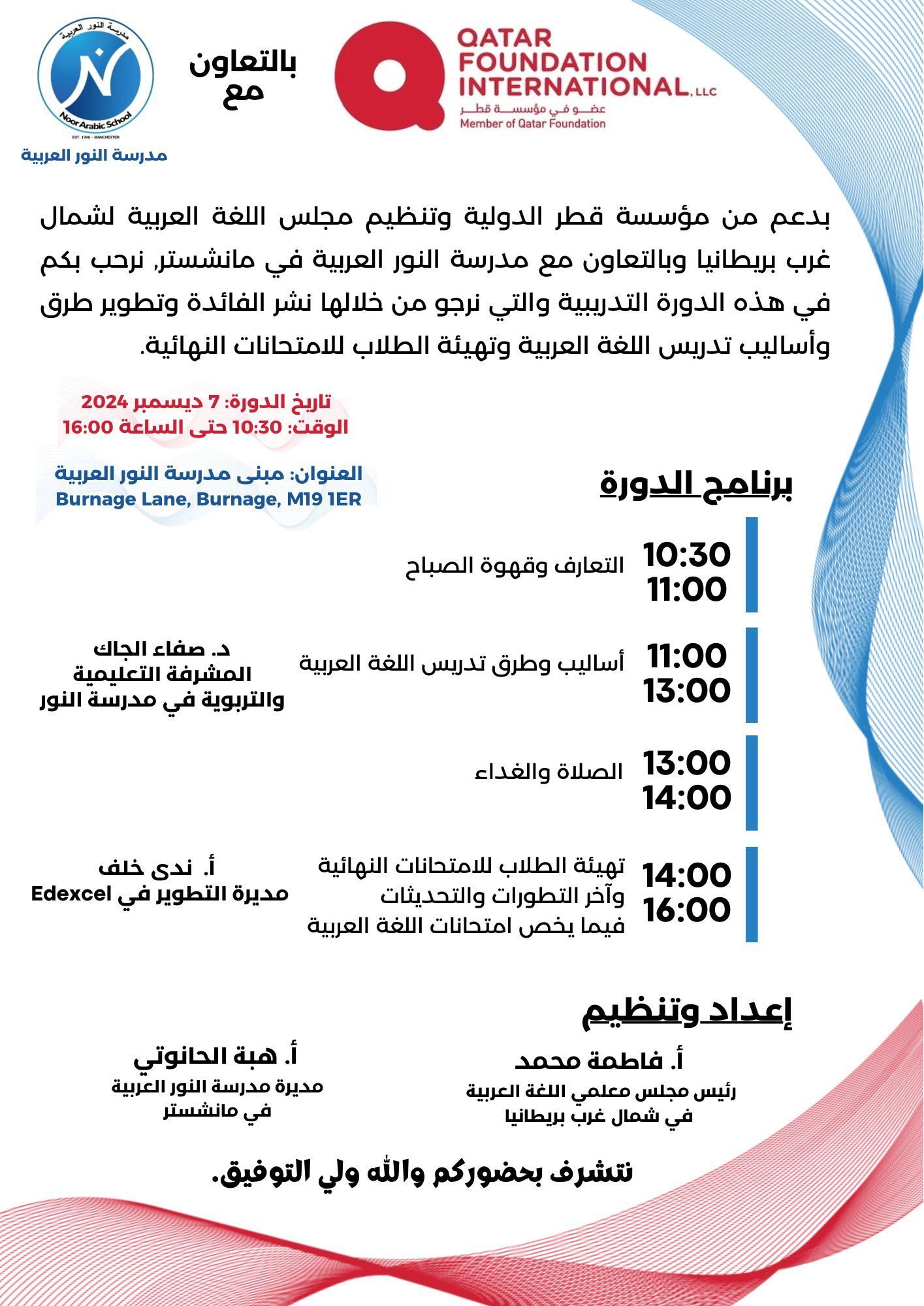
7 December 2024
The first full-day, in-person CPD
Forty-five Arabic teachers met at Noor Arabic School for a full Saturday on teaching methods, then on Edexcel updates and exam preparation. Co-presented by Dr. Safa Elgak and Nada Khalaf.
A community of Arabic-language teachers across the North of England — meeting, training, celebrating Arab culture, and supporting one another in classrooms from supplementary Saturday schools to mainstream sixth forms. Funded and organised by Qatar Foundation International, led by Mrs. Fatima Mohamed.
Discover our community →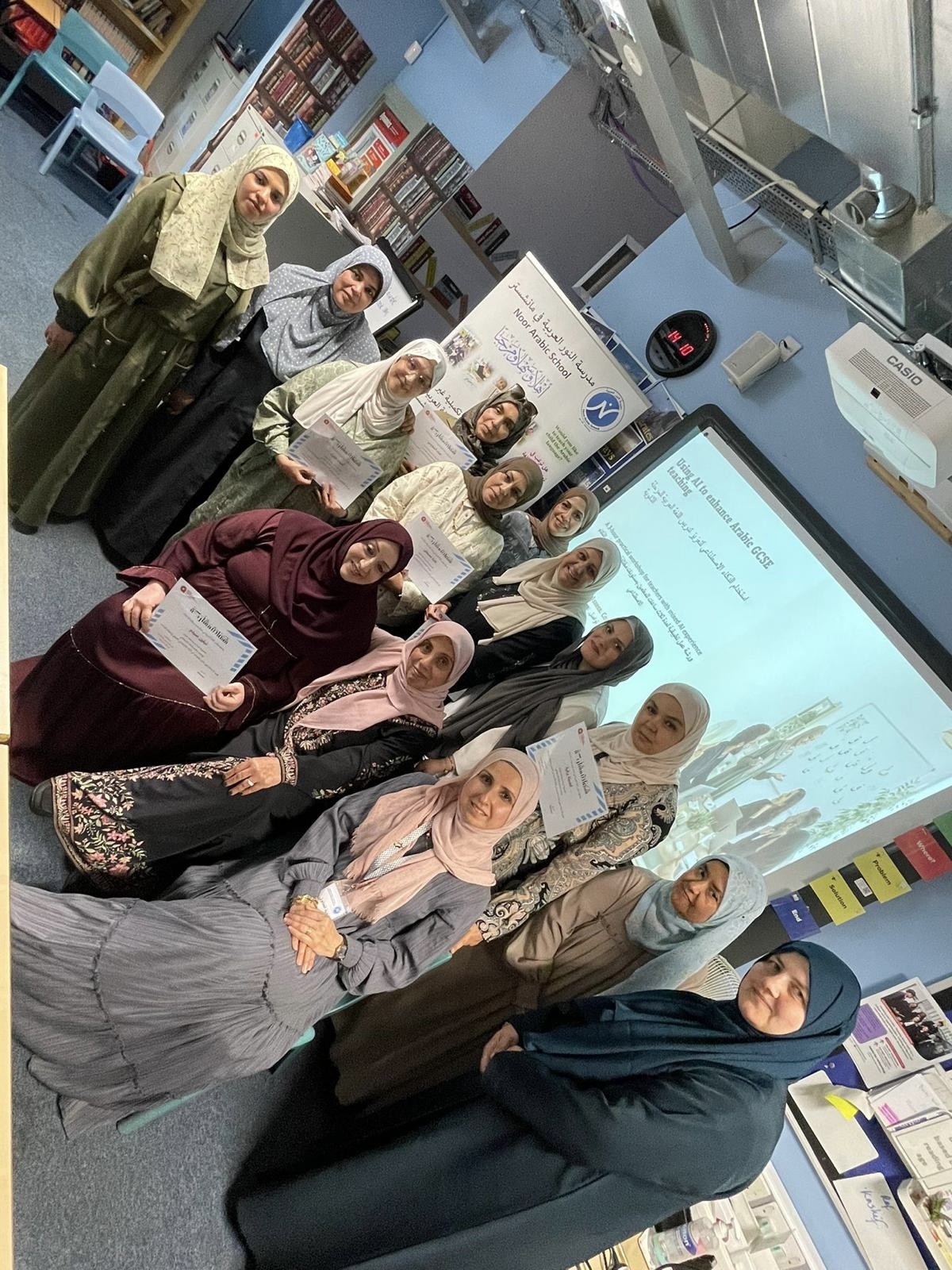
The Arabic Teacher Council (Northwest) has successfully planned and organised the final training of the academic year — an excellent session by Mrs. Muntaha Aafan on using AI in the teaching and learning of Arabic.
The training was useful, informative, and genuinely interactive — members left with practical techniques to take straight back into their classrooms.
See all recent trainings →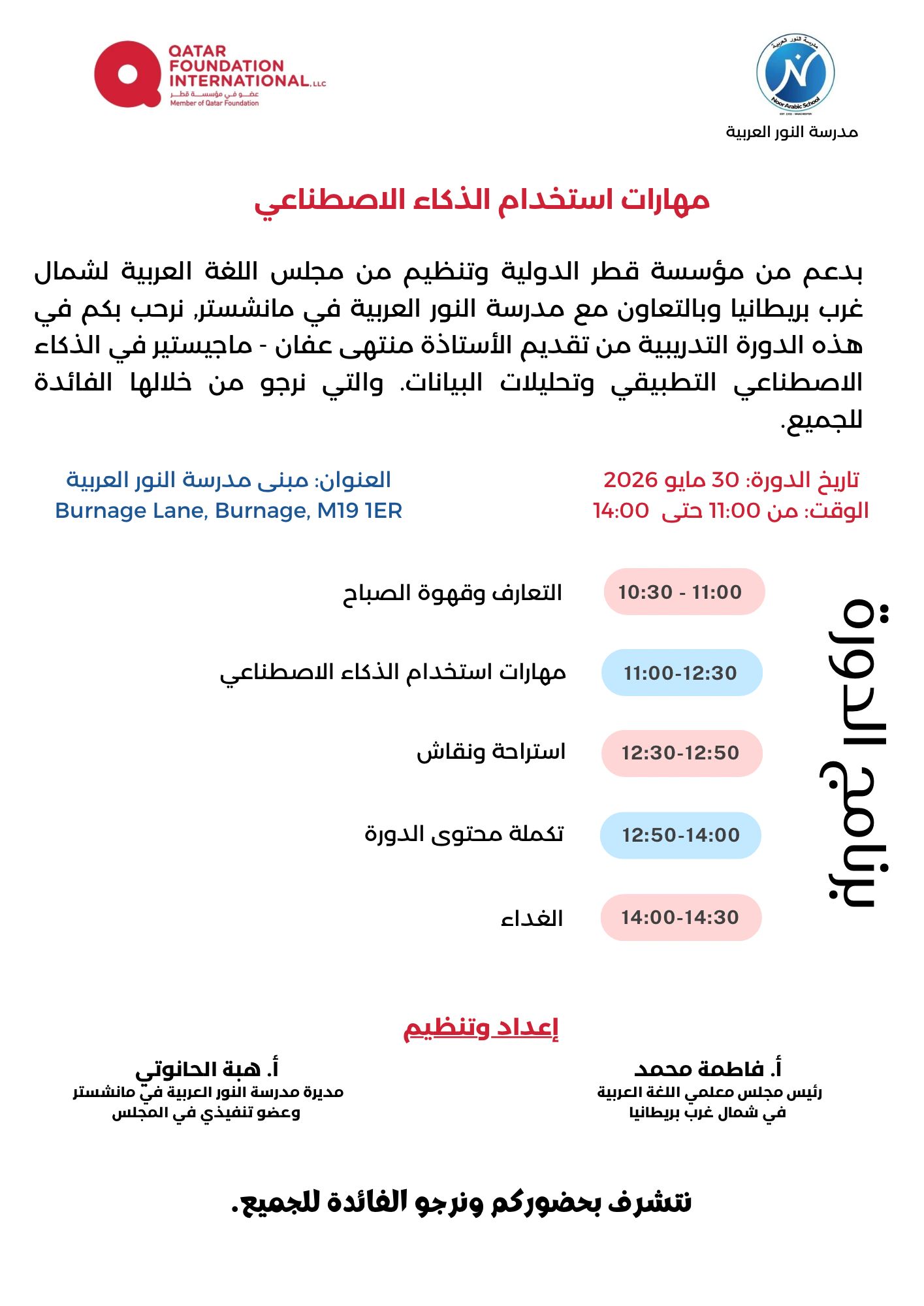 Course programme · 30 May 2026
Founded in January 2020, the Arabic Teacher Council (Northwest) is a network of Arabic-language educators working across supplementary Saturday schools, mainstream secondaries, sixth forms and online communities. Our aim is to raise the standard of teaching Arabic language and culture across the UK — and to create real awareness of this language in our local communities. We share what works in the classroom, prepare students for GCSE and A-Level, and advocate for Arabic as a meaningful Modern Foreign Language in British education.
Workshops on speaking, writing, reading and exam technique — led by experienced teachers and exam-board specialists.
A safe space to swap resources, raise concerns about exam reform, and find peers who teach the same students you do.
Annual culture days that bring children, parents and teachers together around food, calligraphy, henna, music and games.
Engaging with exam boards and the wider sector so that Arabic GCSE and A-Level remain accessible to native and non-native learners alike.
Members come from across Greater Manchester, Lancashire, West Yorkshire and the North East. Most of us teach on Saturdays at supplementary schools, and during the week in mainstream classrooms, tutoring, or online.
Six academic years. From building wellbeing in lockdown to live sessions on the reformed Edexcel exam. Here is what we have run together.
The pandemic year. We met where we could and trained where we couldn't.
Members travelled to the ACTFL conference and we ran our first post-lockdown culture day.
Specialist sessions on the parts of the exam our students find hardest.
Building a coherent framework that follows a child from year 3 to year 11.
Our biggest single training to date, co-presented by Dr. Safa Elgak and Nada Khalaf.
This year we have leaned into pedagogy: how Arabic teachers actually run a lesson.
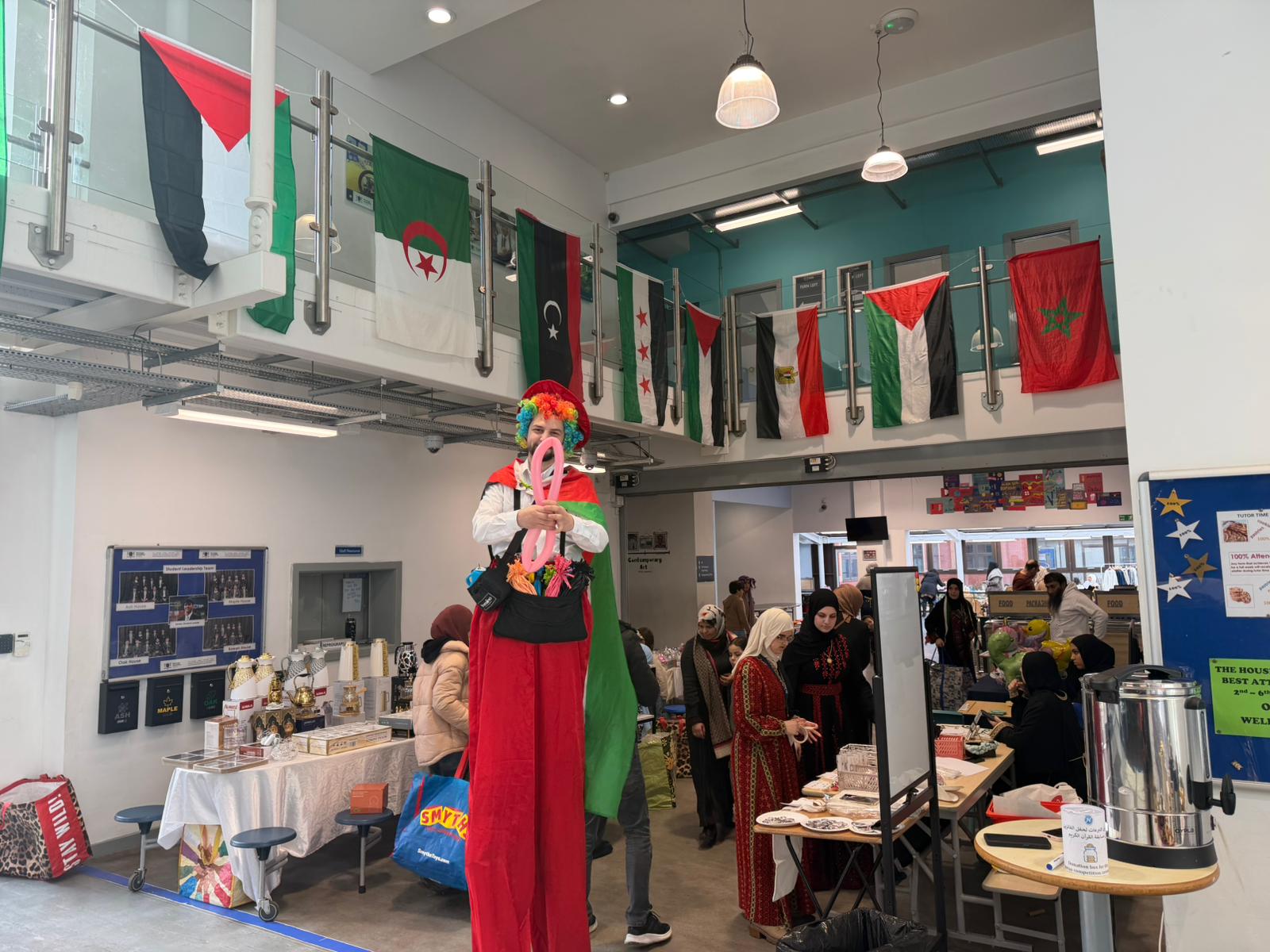
Each spring our culture day turns a school corridor into something between a wedding, a souk and a science fair. Children hold up the flags of Algeria, Somalia, Egypt, Syria, Morocco, Palestine — wherever their families are from. There is calligraphy. There is a clown on stilts. There is far, far too much baklava.
It is the moment in the year that reminds the council why this work matters: a generation of children seeing their language honoured in front of their parents and their teachers, in their own city.
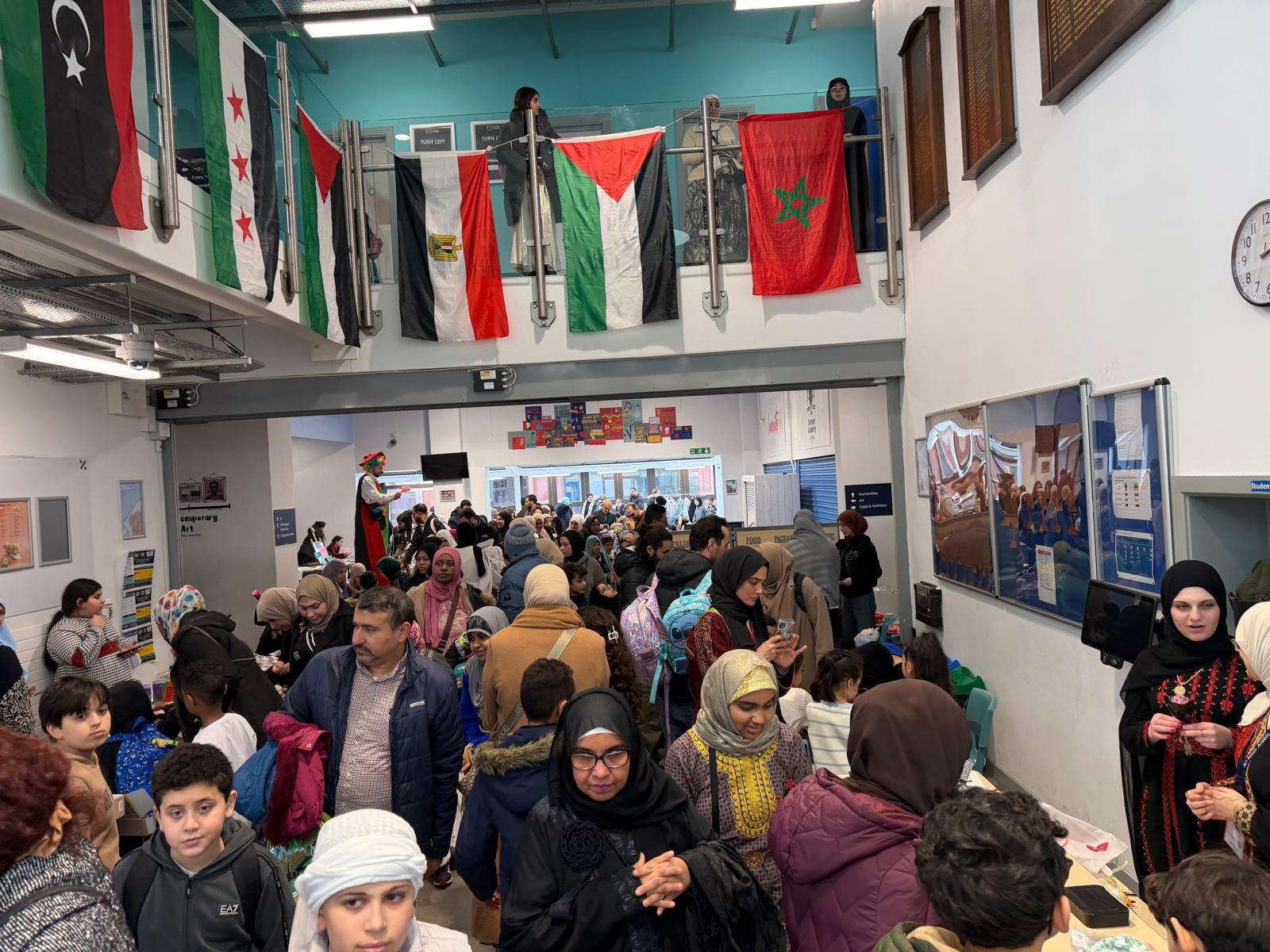
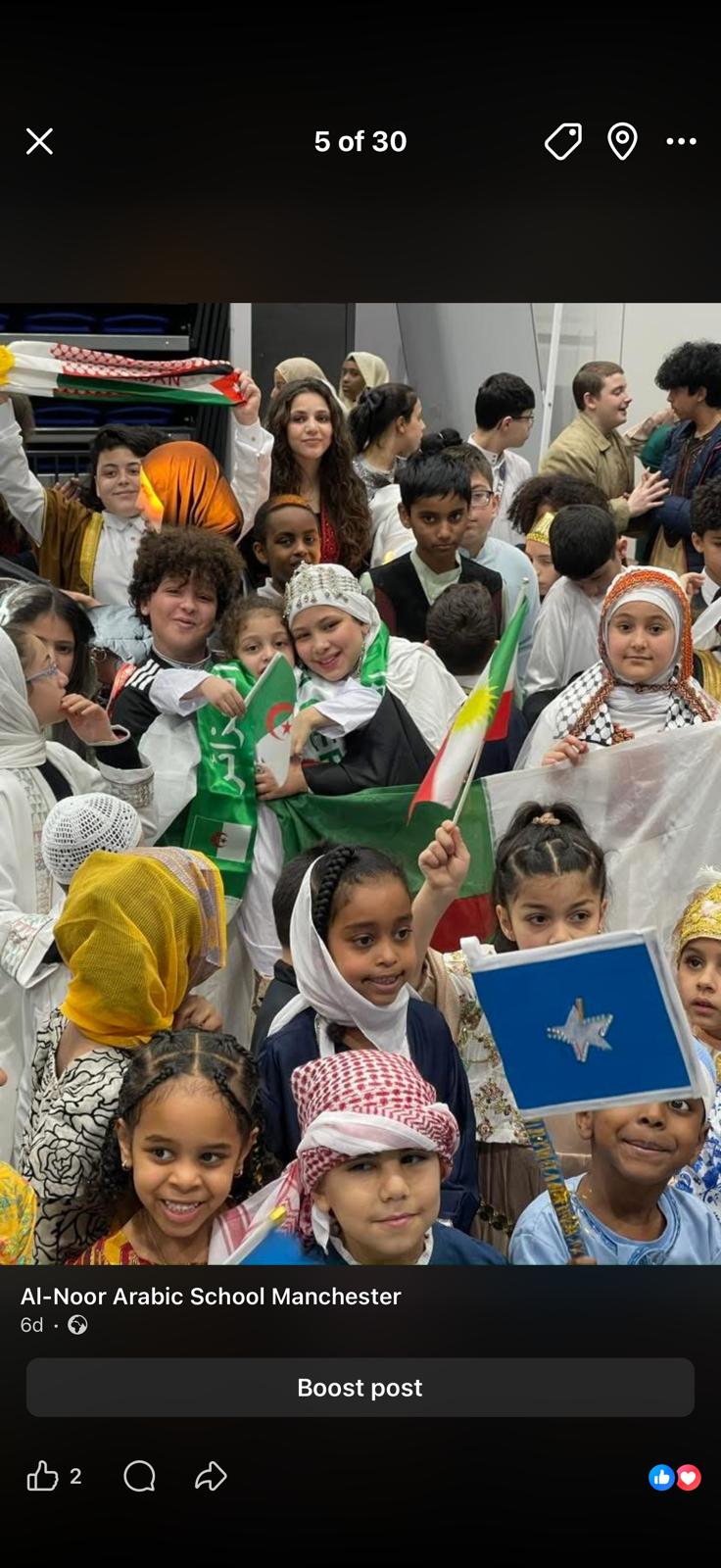
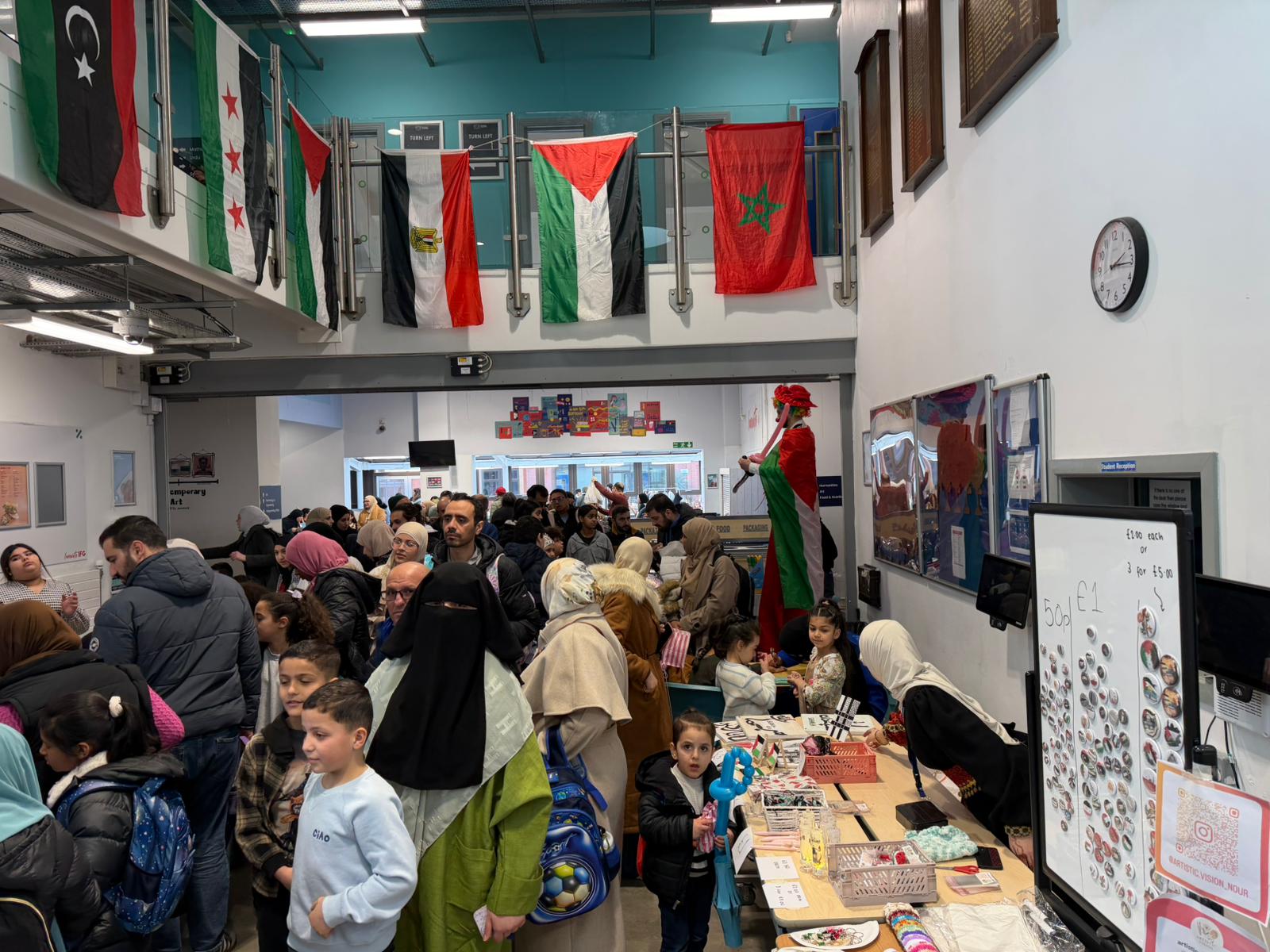
Mothers, teachers and older students bring in dishes from home: Moroccan tagine and ka'ak, Palestinian maftoul, Syrian sweets, Yemeni breads. We line them down a forty-foot table and the queue stretches up the stairs.
A small portion of the proceeds always goes to communities that need it more than we do — most recently to relief in Türkiye and Syria. It is the council at its most domestic, and arguably its most political.
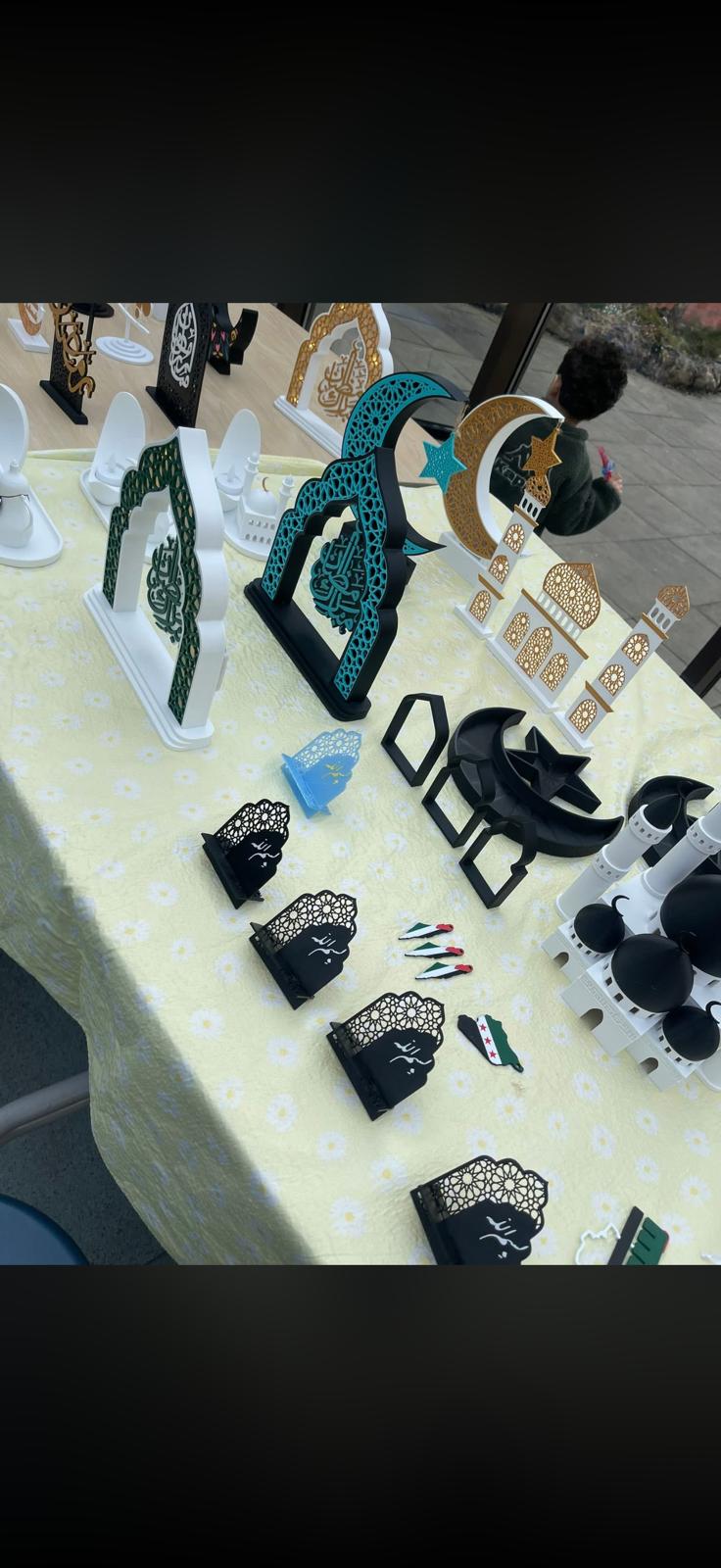
Calligraphy stalls, henna queues, bookmarks, board games, traditional dress — moments from culture days, training rooms and classrooms.
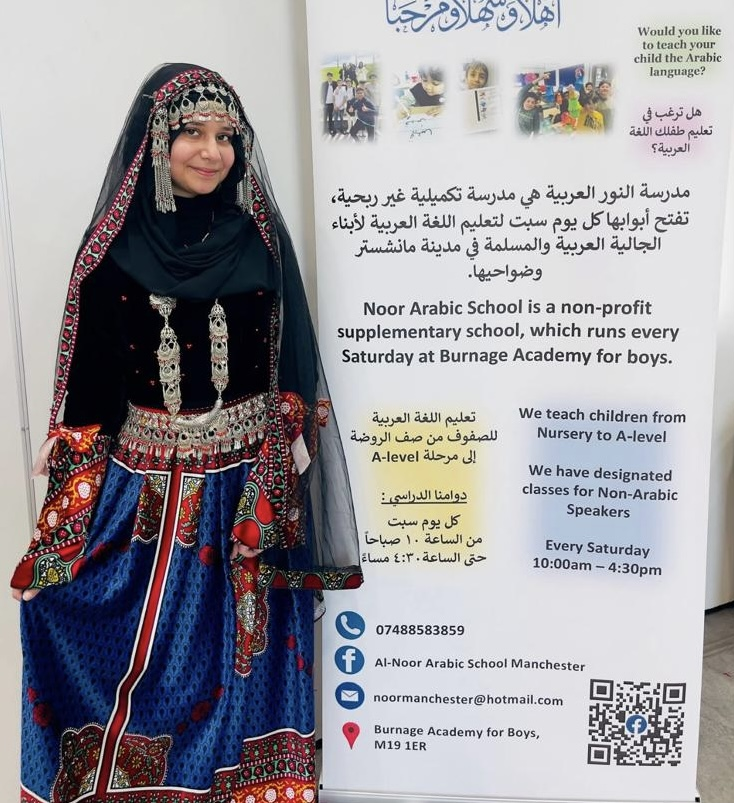
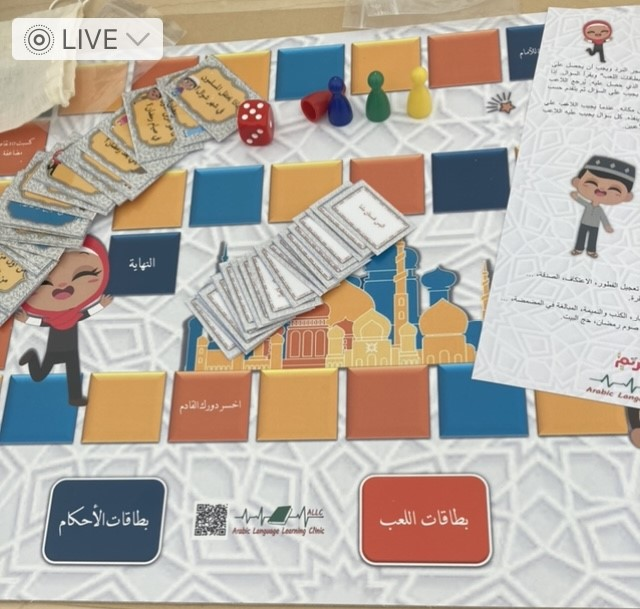
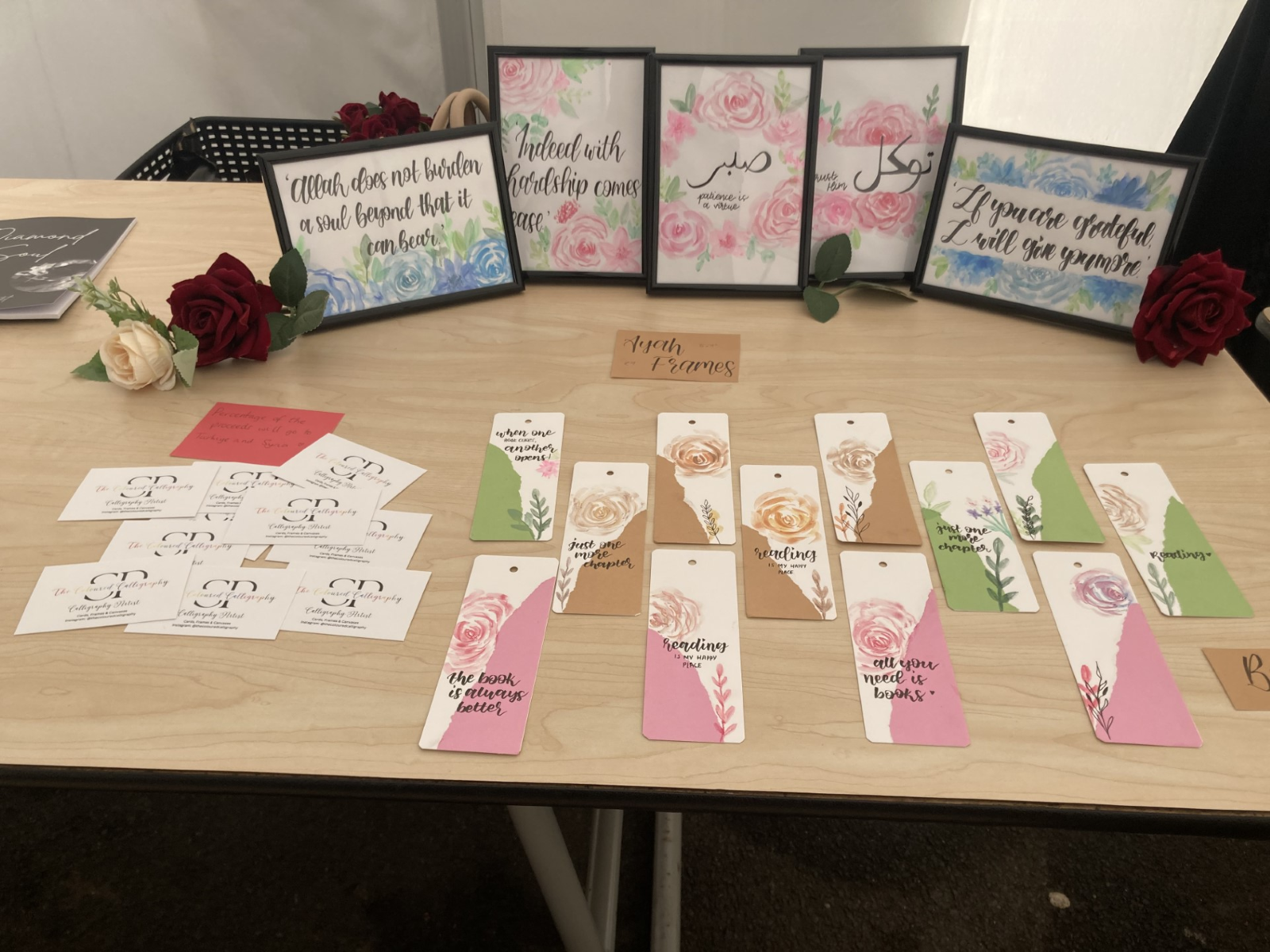
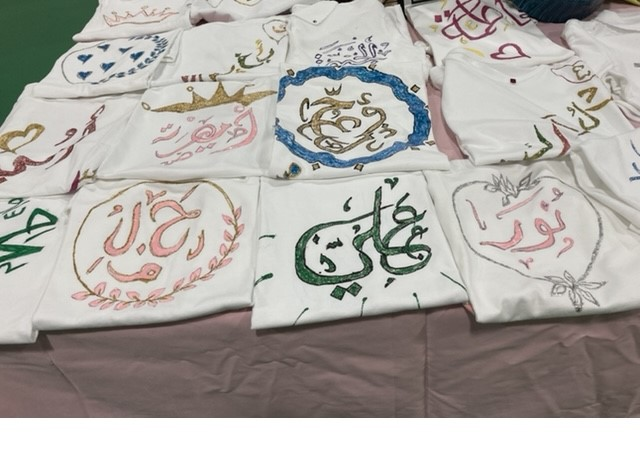

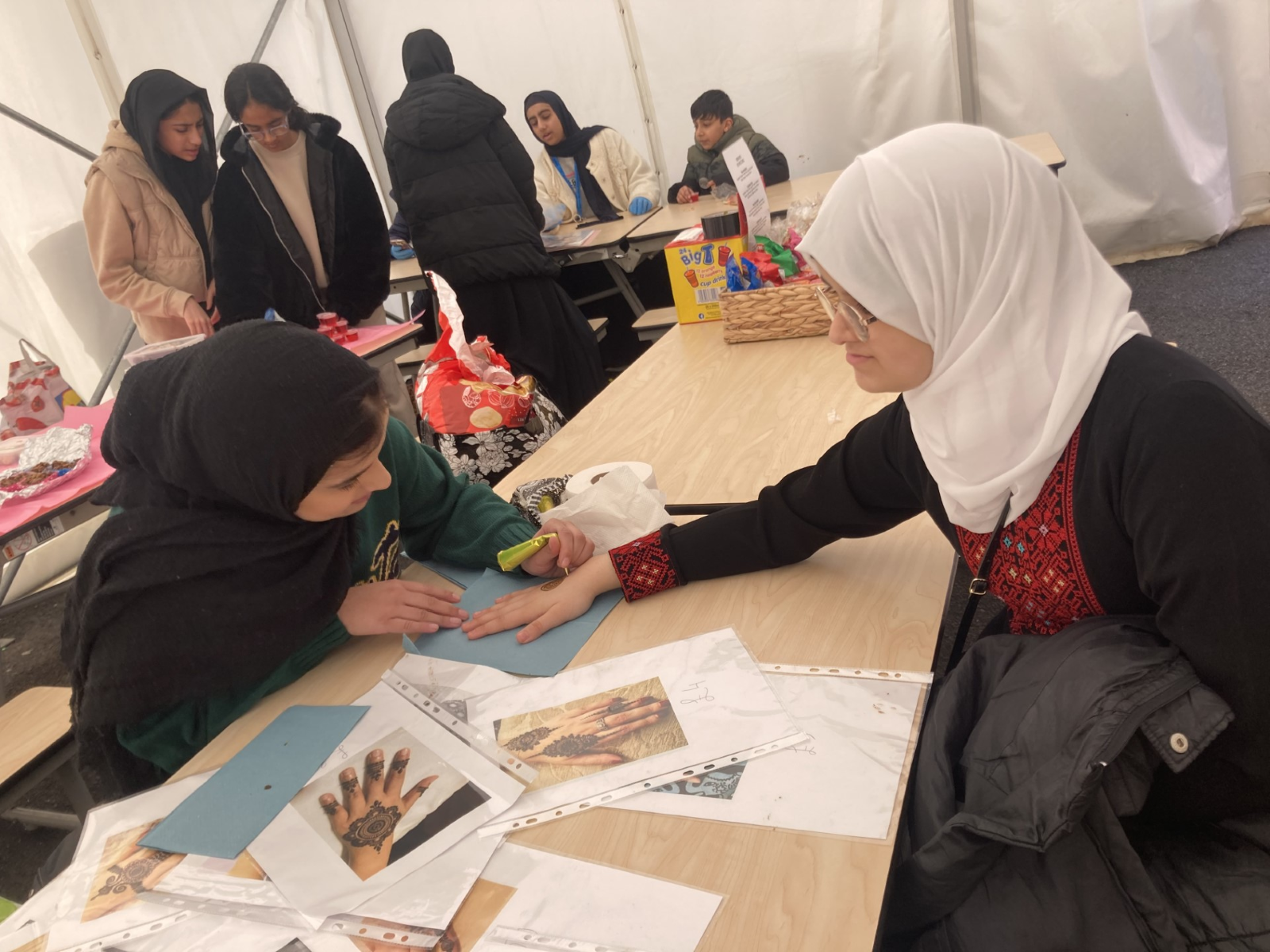
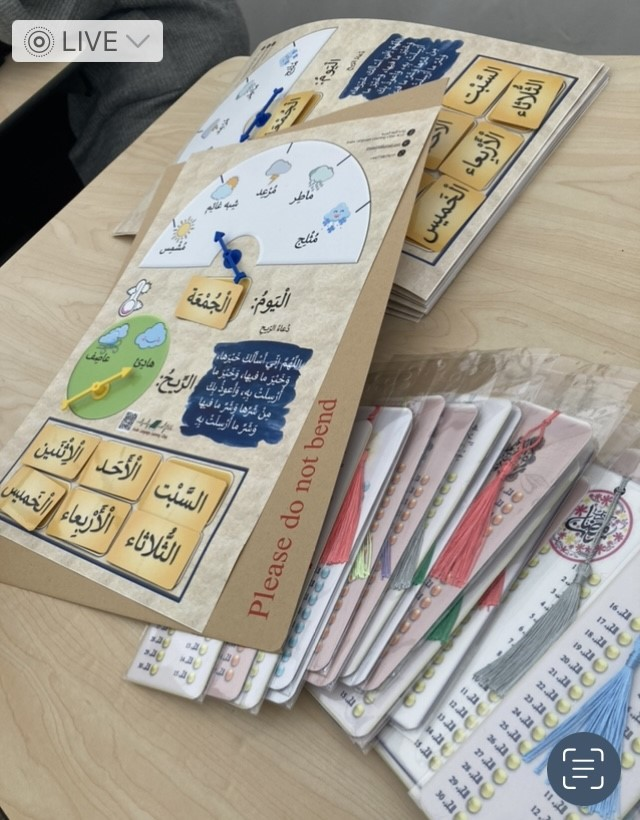
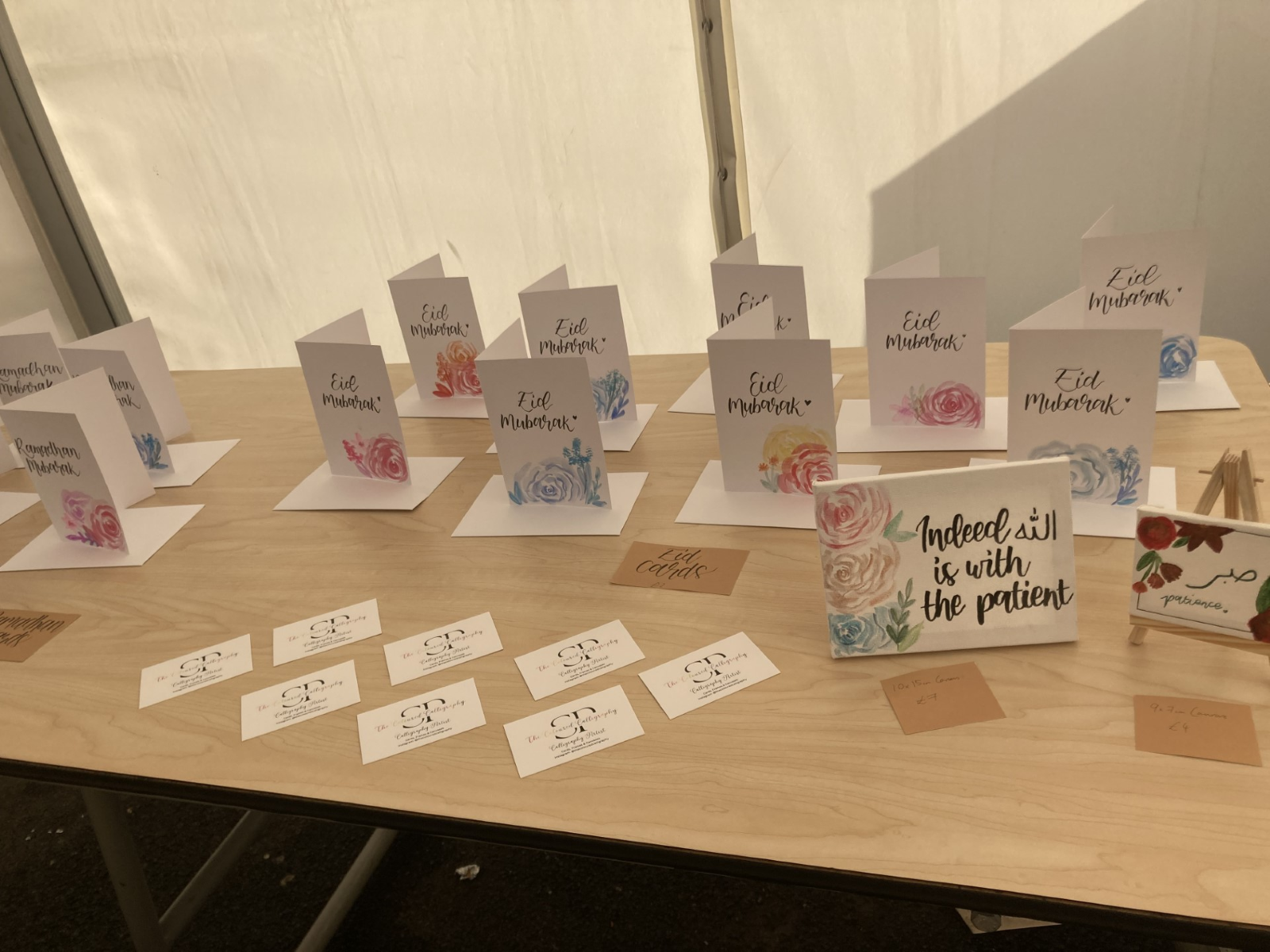
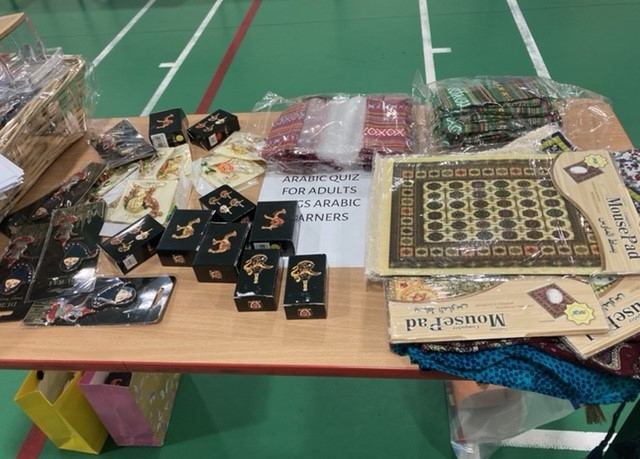
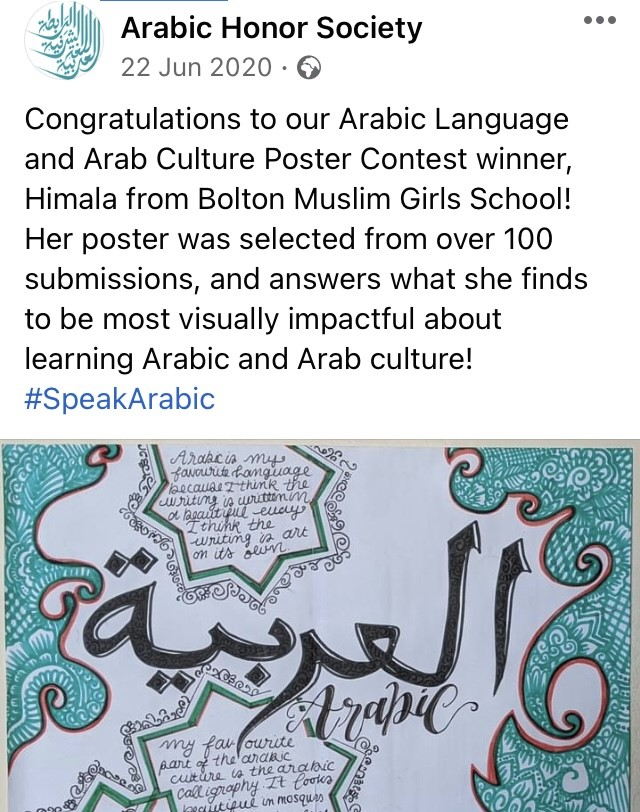

Funded by Qatar Foundation International, with sessions hosted across our partner schools — most recently at Noor Arabic School in Manchester. Each one ended with handed-out certificates and a long table of teachers swapping classroom tricks.
Forty-five Arabic teachers met at Noor Arabic School for a full Saturday on teaching methods, then on Edexcel updates and exam preparation. Co-presented by Dr. Safa Elgak and Nada Khalaf.
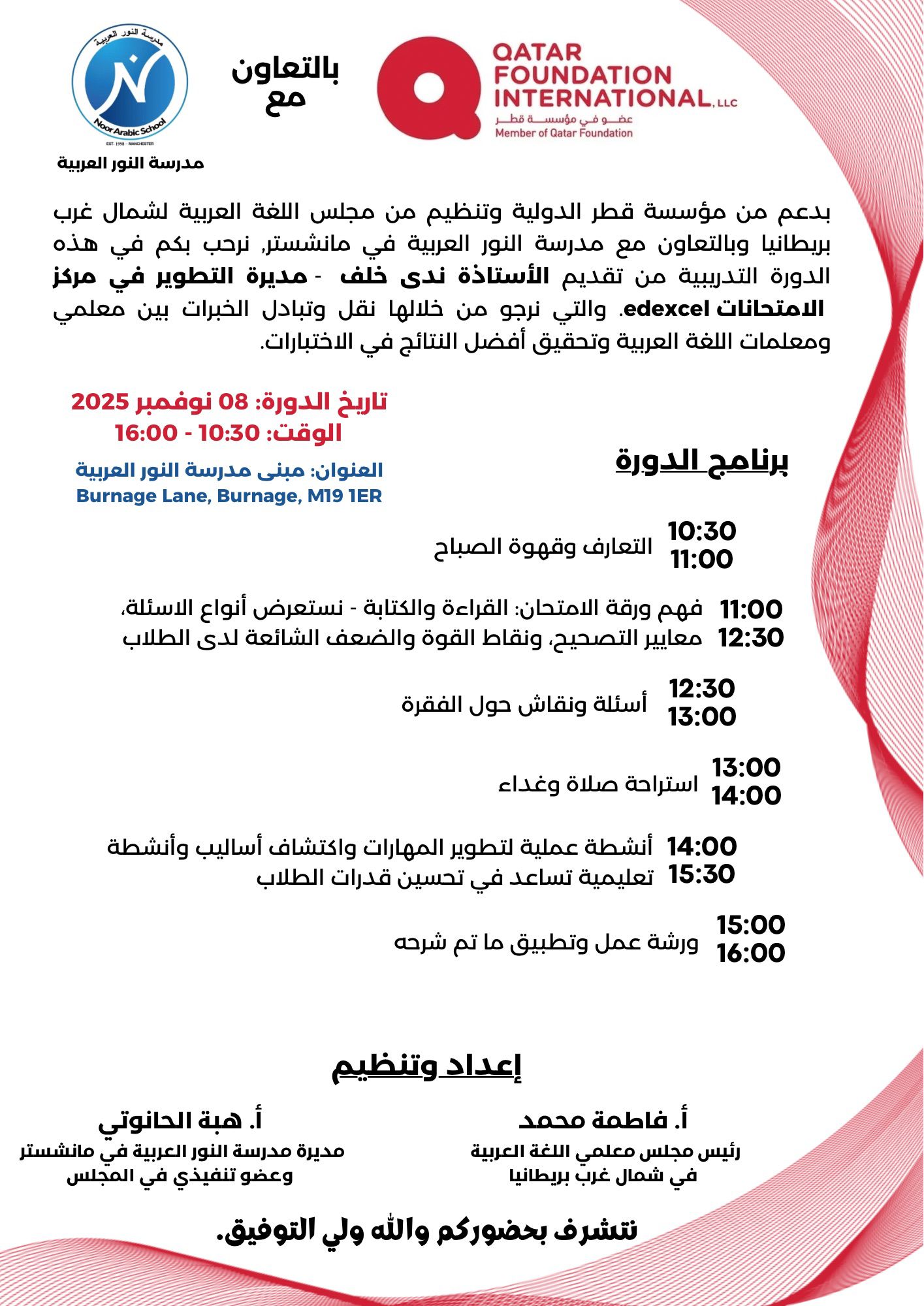
Nada Khalaf returned for a deep dive on the reading and writing papers — mark schemes, common pitfalls, and practical activities to lift students' scores. We spent the afternoon designing classroom tasks together.
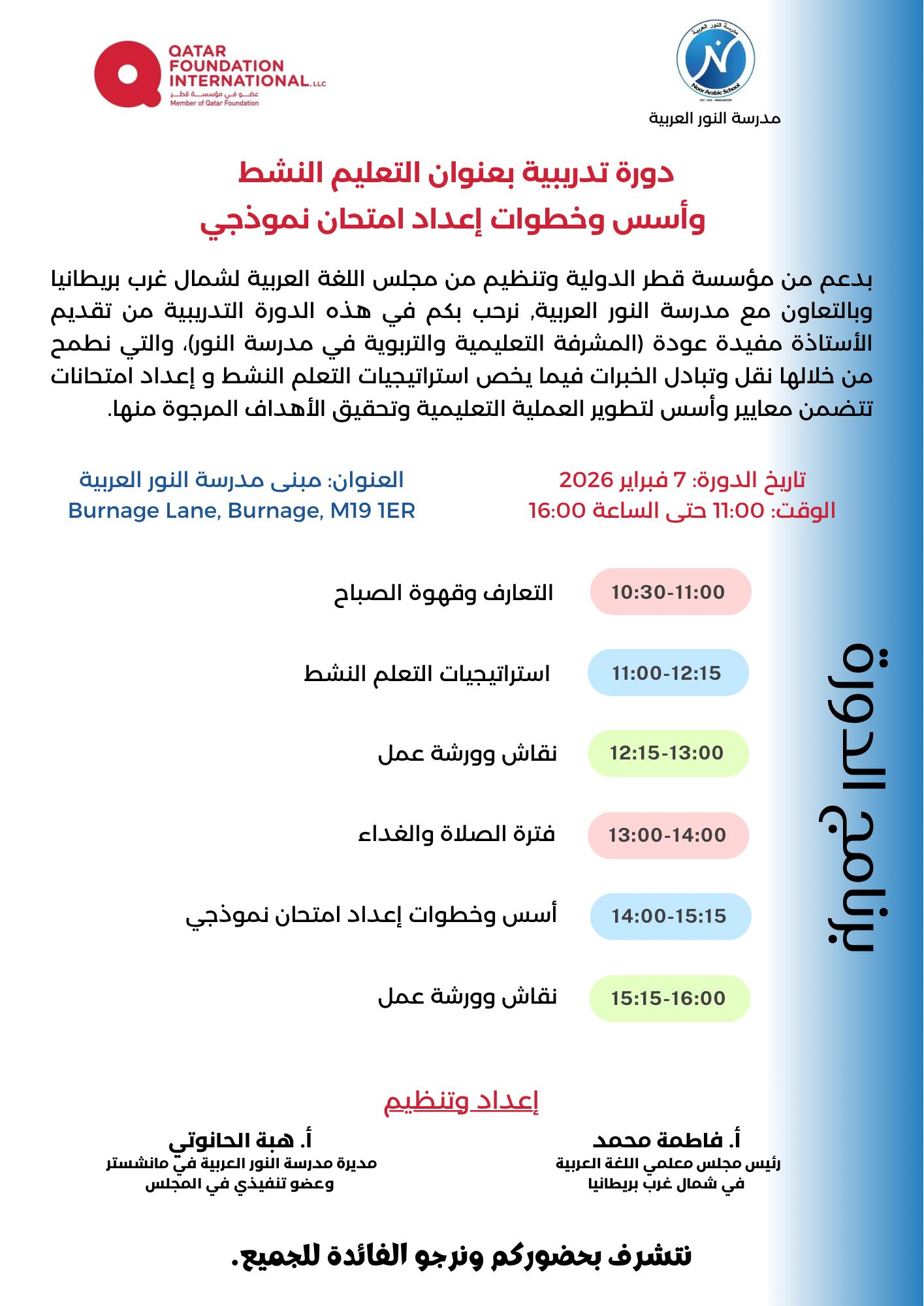
Dr. Mufida Ouda led a workshop on active-learning strategies — getting the quietest students talking — and on the principles of writing a fair, useful model exam. Certificates handed out at 3:30pm.
Mrs. Muntaha Aafan (Master's in Applied AI and Data Analytics) led an excellent, interactive workshop on using AI to enhance Arabic teaching and learning. Members left with practical techniques to take straight back into their classrooms.
A recurring theme in our group chats: the 2016 GCSE reform brought Arabic in line with other modern foreign languages — but didn't fully account for the additional learning hours Arabic script and morphology require. Members discuss it candidly.
I'm sure we have in this group teachers teaching Arabic at university level — and the level at university is less than the GCSE and A-Level. Arabic used to be easier before 2016, but since they tried to bring it in line with the other MFLs, things became more challenging. They didn't take into consideration that Arabic has a different script and requires more hours.
— Member, council group chatWe teach in international schools and the minority are our Arab heritage students. We have students who are non-Arabs and love to do the course, but with what they're seeing they are all quitting it and choosing other languages.
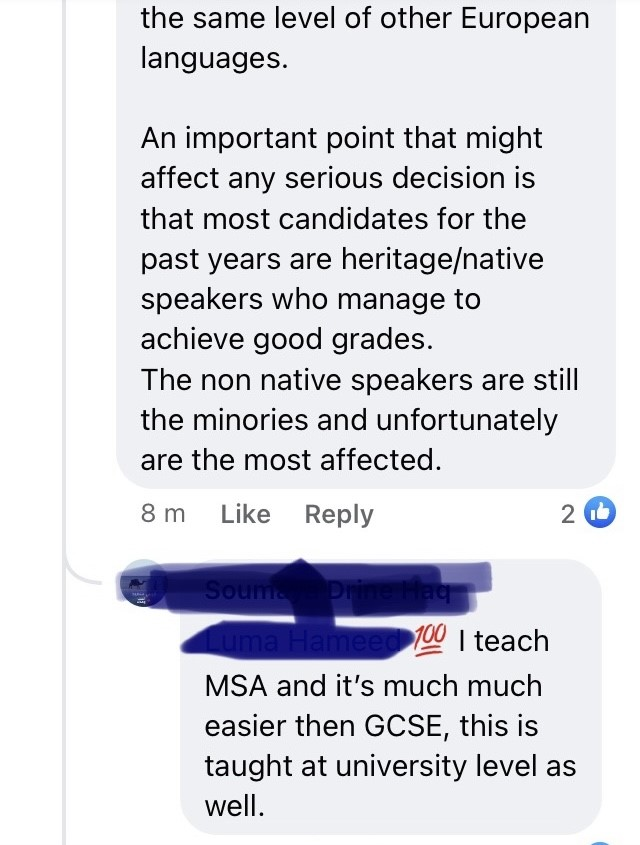
— Member, on retentionI teach MSA and it's much, much easier than GCSE. This is taught at university level as well. Most candidates these past years are heritage / native speakers who manage good grades. The non-native speakers are still the minority — and unfortunately the most affected.
— Member, on the cohort gap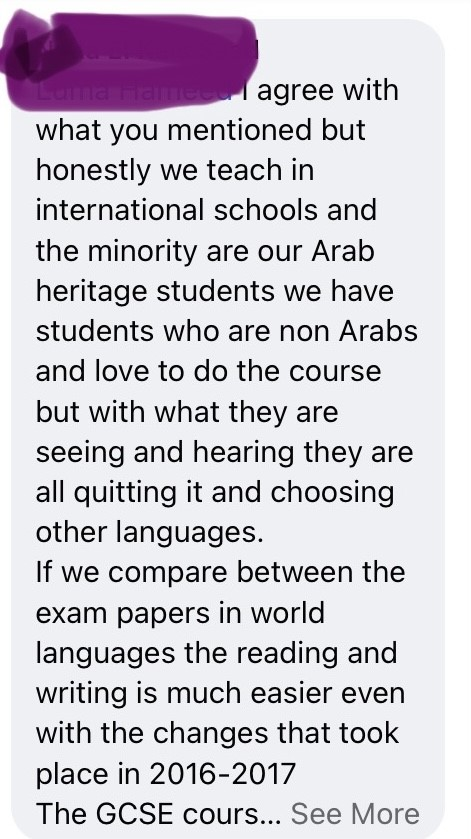

A lead and three executive members, all serving Arabic teachers and learners across the North alongside their day jobs in the classroom.
Heba Al Hanouti
Riham Elbaz
Niveen Sydem
Two schools share the practical work of the council — one hosts the QFI-funded programme and the council's administrative home, the other hosts our teacher training days.
BMGS is the home of our council head Mrs. Fatima Mohamed, and the administrative base for the council's QFI-funded programme.
Our teacher training days — the all-day in-person CPDs — are hosted at Al-Noor Arabic School in Manchester, including the December 2024, November 2025, February 2026 and May 2026 trainings.
Everything the council does — every training, every culture day, every set of materials we bring back to our classrooms — is funded and organised by QFI.
QFI funds and organises the Arabic Teacher Council (Northwest). Their continued support for Arabic-language education across the United Kingdom pays for our trainings, our trainers' travel, our classroom materials, and the all-day in-person CPDs that bring members together from across the North.